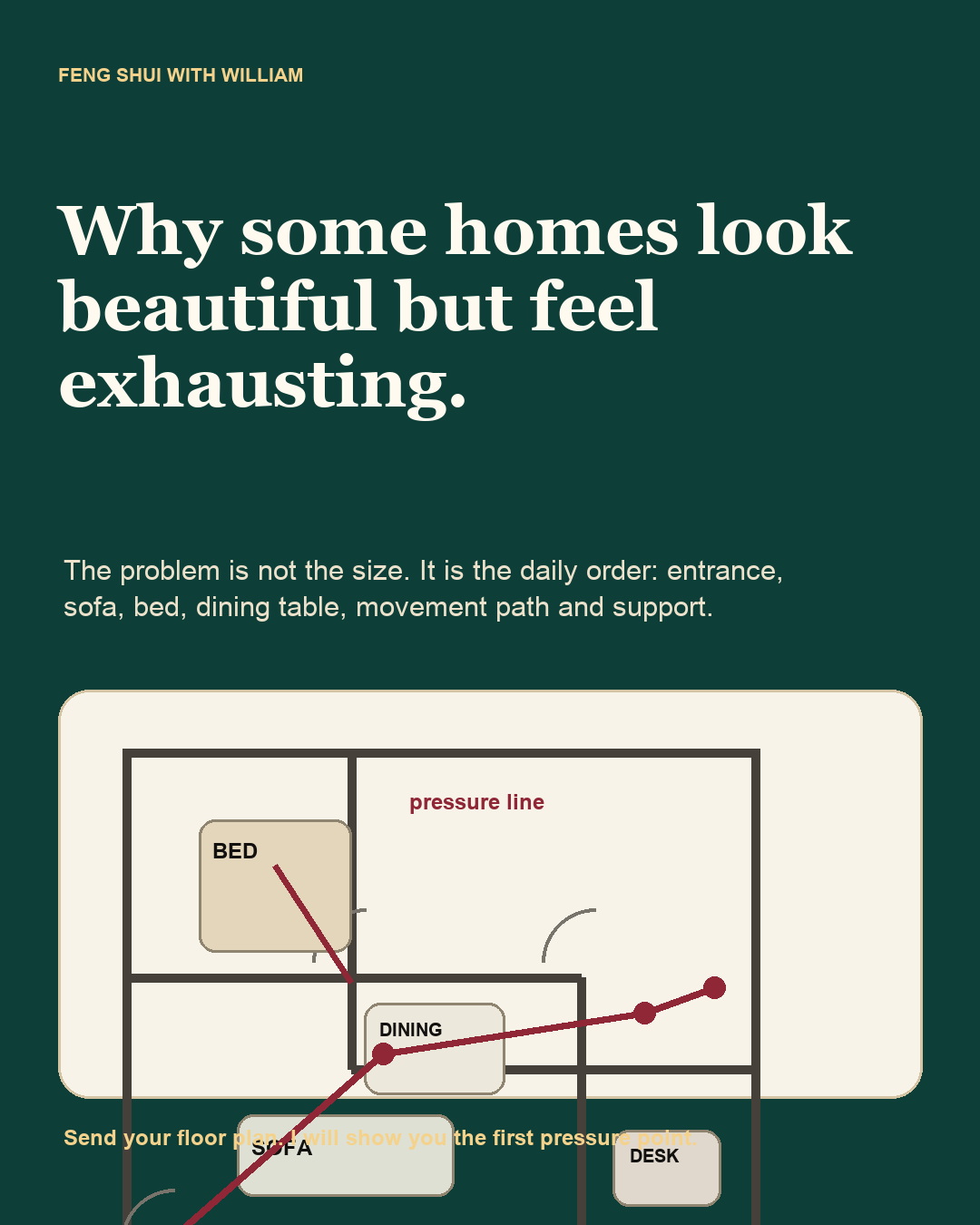
Many homes look correct during the viewing. The view is good, the lighting is controlled, the developer presentation feels polished, and the price may look reasonable. But after people move in, a different question appears: why does this beautiful home make daily life feel heavier?
A home is not a photo. It is a route you repeat every day.
Most buyers begin with area, view and price. Those are important, but they only explain whether the home is attractive. They do not explain whether the home supports your body after you live there.
A home begins at the entrance. Where do shoes, bags and daily objects land? Does the door give you a gentle transition, or does it expose the whole home immediately? When you walk from the entrance to the kitchen, dining table, sofa and bedroom, does the path feel natural, or does it keep cutting through the places where people are supposed to rest?
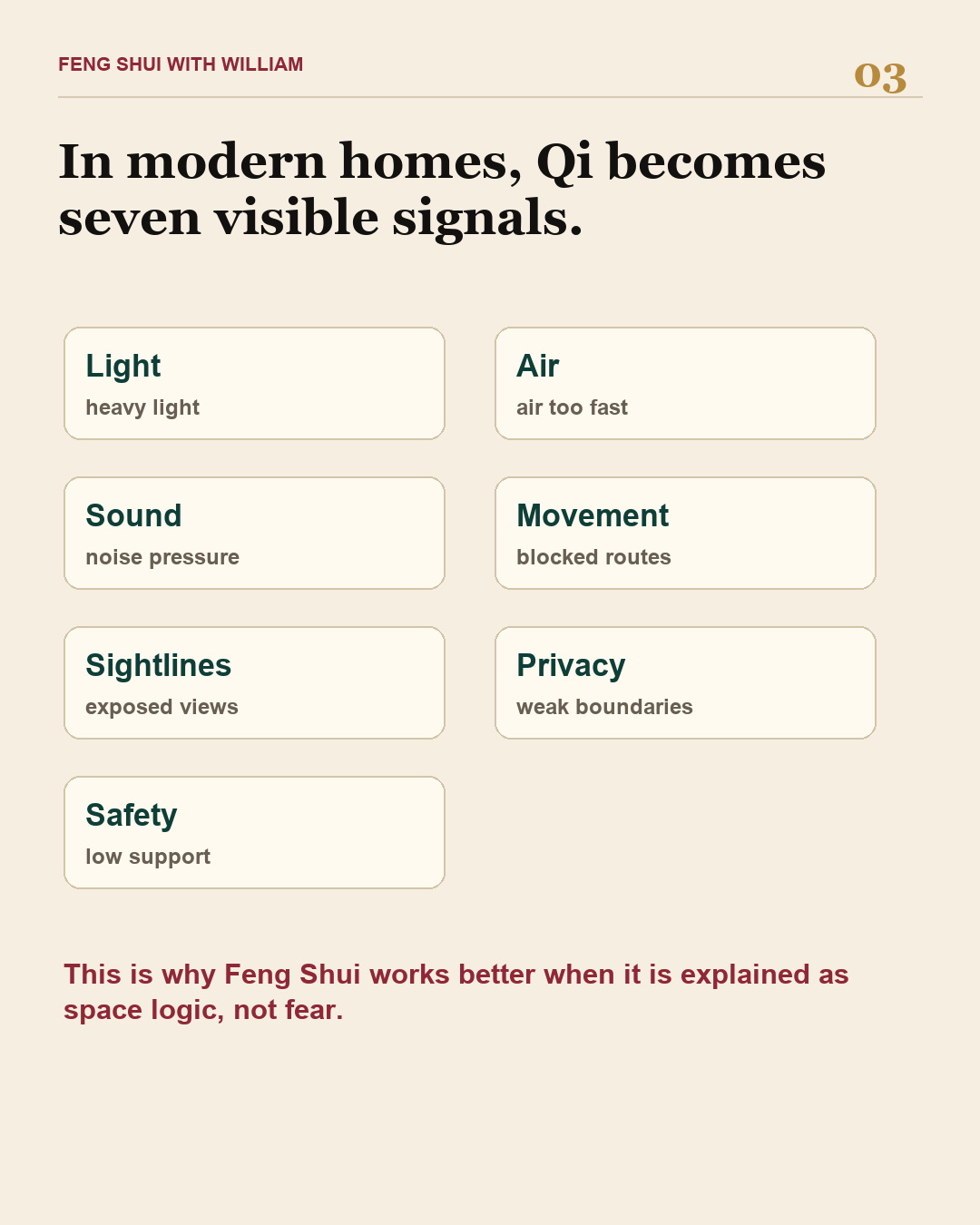
In traditional Feng Shui people speak about Qi. In modern residential language, I translate it into seven visible signals: light, air, sound, movement, sightlines, privacy and safety.
Read from outside to inside.
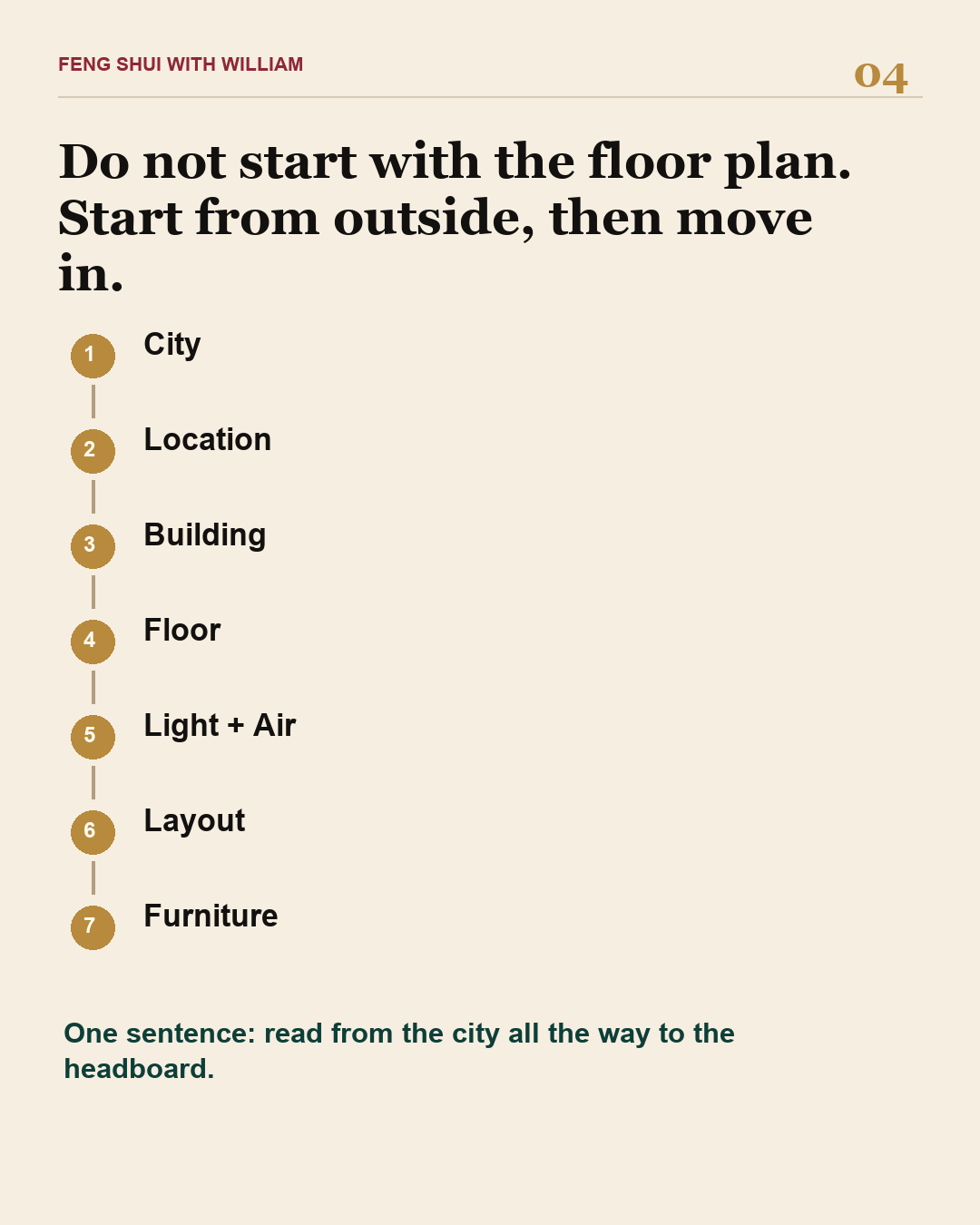
One common mistake is starting with the apartment plan too early. A serious home reading begins outside and slowly moves inward: city, location, building, floor, light and air, layout, then furniture.
First, ask whether the city has long-term population, industry, cash flow and real residential demand. Then look at the location. A good location is not only busy; it is active without making the home noisy. Next, read the building and the floor: distance from other towers, road pressure, privacy, equipment, sunlight, wind, elevator efficiency and maintenance realities.
Only after that should you judge the floor plan and furniture. The question is simple: after the real bed, sofa, dining table and desk are placed, can people sit, sleep and move without pressure?
Four positions reveal whether a home drains people.
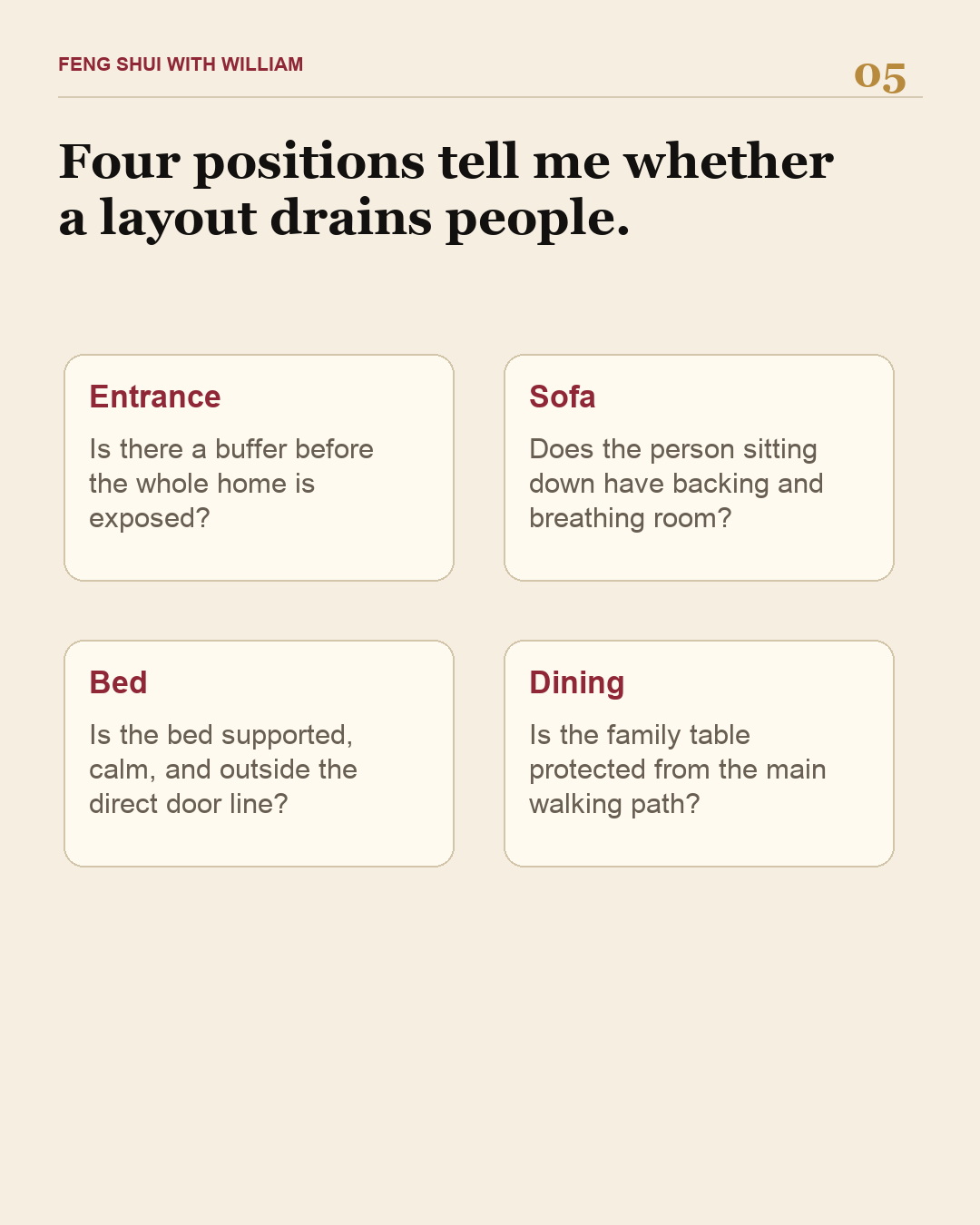
The first position is the entrance. If the door opens and immediately exposes the living room, dining table or bedroom door, the home has no transition. A good entry area does not need to be large. It needs to slow down the outside world before it enters the private space.
The second position is the sofa. A living room is not better just because it is larger. The real test is whether a person sitting down has support behind them and breathing room in front of them.
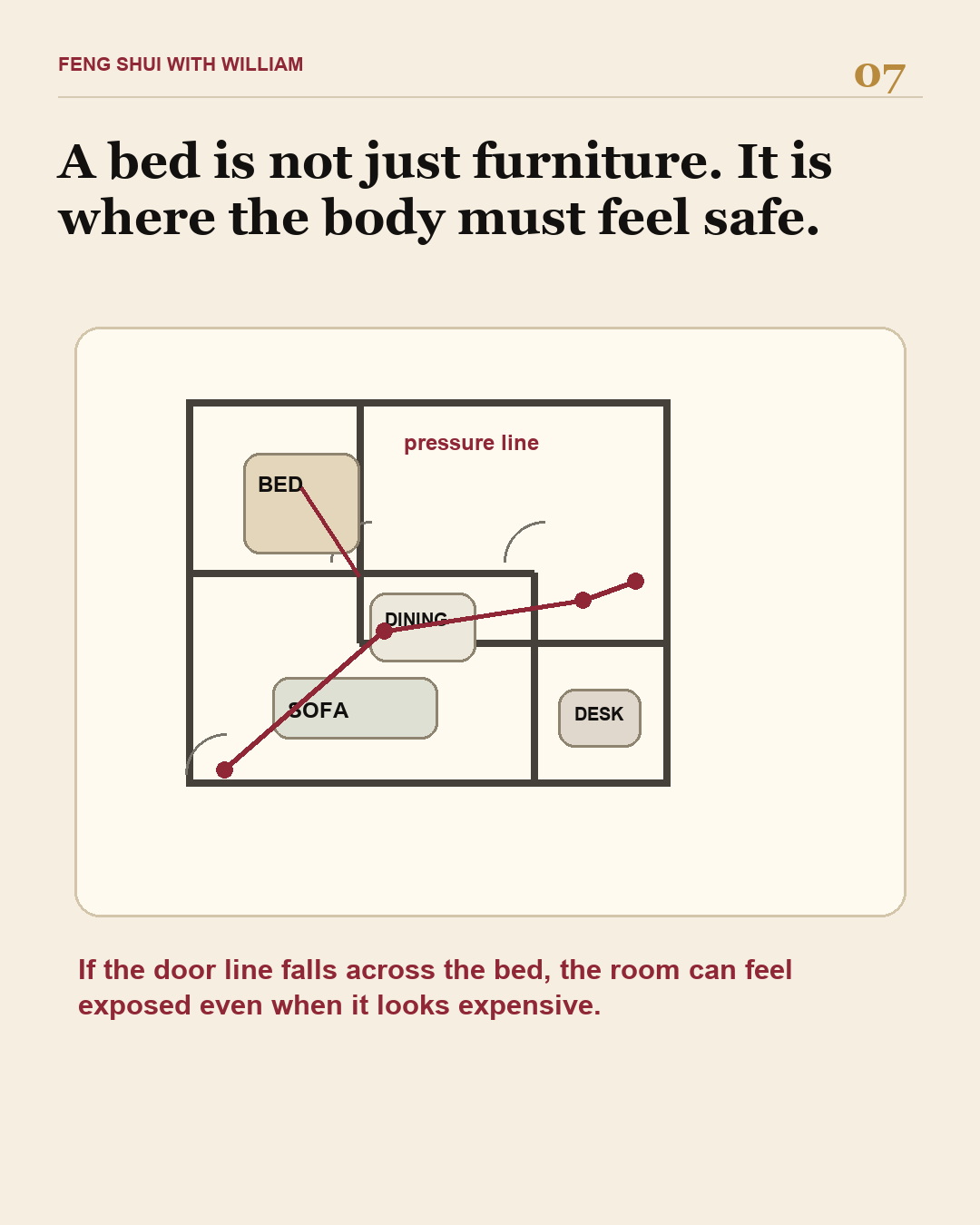
The third position is the bed. A bed needs backing, calmness and control. Ideally, you can sense the door without being directly hit by the door line. A bedroom that feels like a corridor will not become restful just because the decoration is expensive.
The fourth position is the dining table. A dining table is a family pause zone. If it sits inside the main walking path, eating, cooking, walking and talking keep interrupting one another.
Pressure lines are often ordinary discomfort repeated every day.
I do not like making Feng Shui sound frightening. Useful Feng Shui must return to lived experience. A door line is not a mysterious curse. It is the direct sightline and movement path that enters a rest area. Sofa without backing is not magic. It simply weakens the feeling of support. A straight movement path is not automatically bad; it becomes a problem when the home has no pause, no turning point and no protected zone.
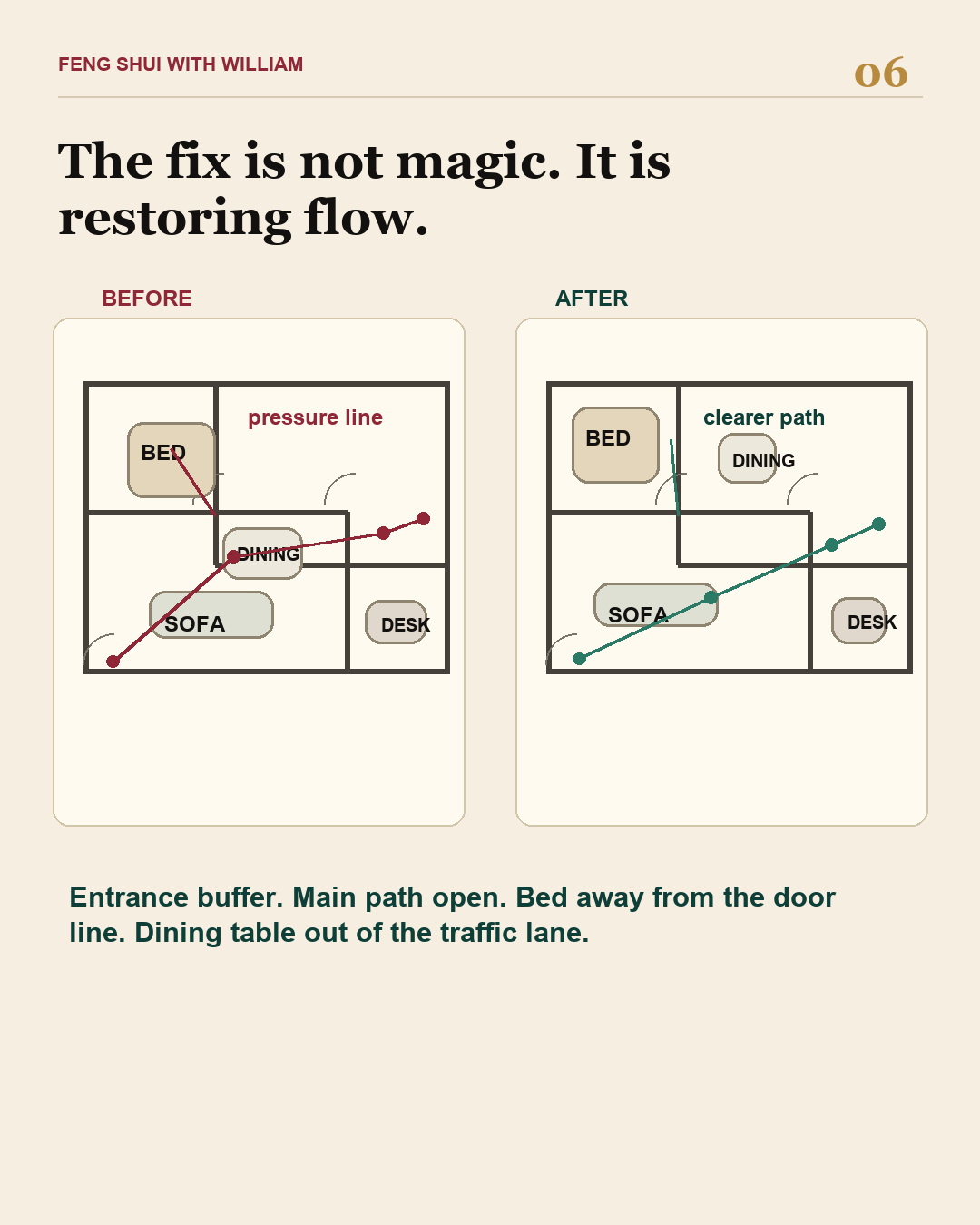
The fix is usually not a large renovation.
Good adjustment is not about making the home look mystical or filling it with objects. The higher-value move is often quiet: create an entrance buffer, keep the main path open, move the bed away from the direct door line, give the sofa backing, and pull the dining table out of the traffic lane.
The home may not become physically larger, but it can feel easier to live in because movement, rest and family rhythm stop fighting each other.
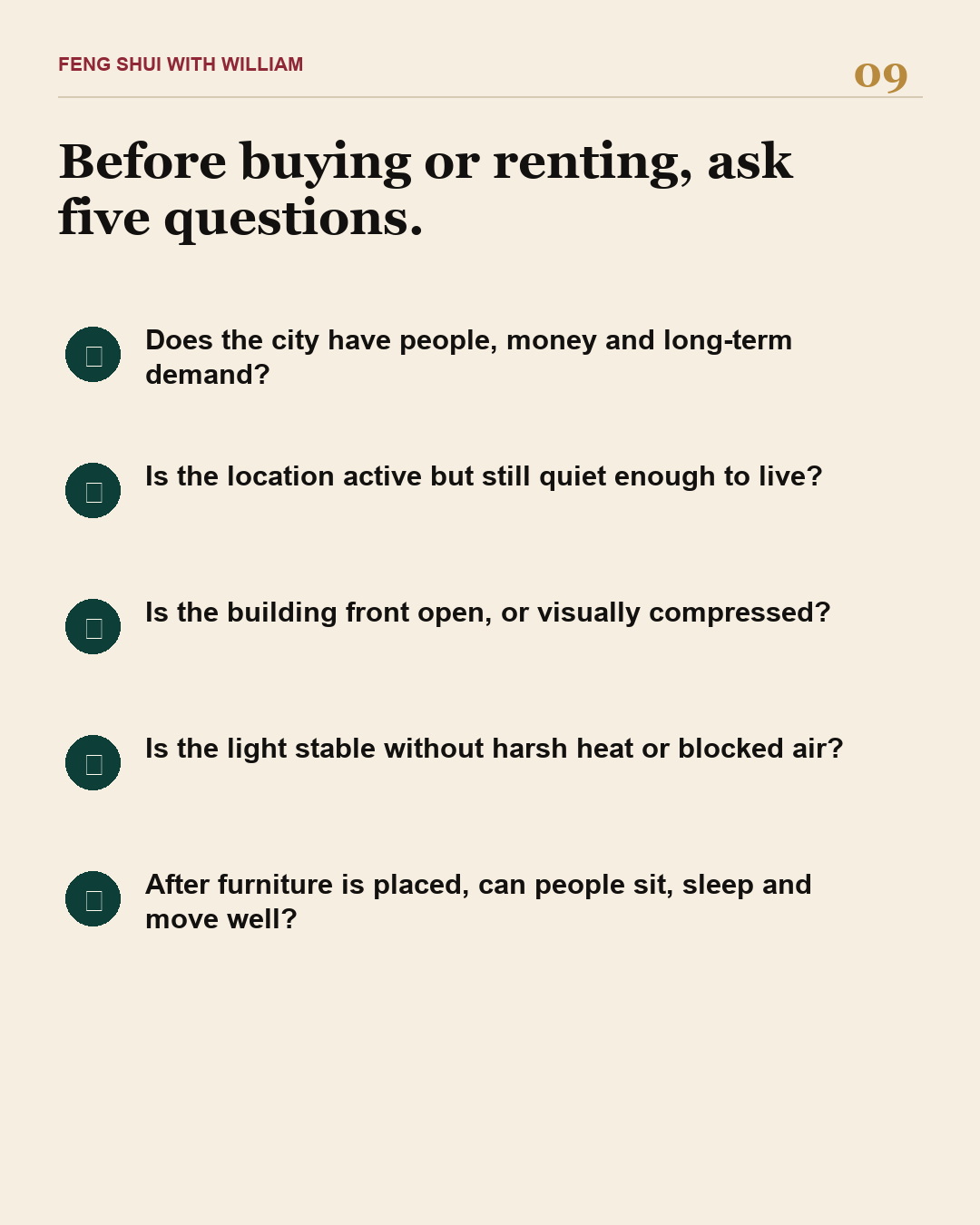
Before buying or renting, ask five questions.
- Does the city have people, money, industry and long-term residential demand?
- Is the location active but still quiet enough to live?
- Is the building front open, or is the view visually compressed?
- Is the light stable without harsh heat, blocked air or constant noise?
- After furniture is placed, can people sit, sleep, eat, work and move well?
A truly good home helps people recover.
A good home is not only the home that looks impressive at first sight. It is the home that helps your body relax after you come back, makes family routines smoother, gives work a supported place, and remains easy for the next tenant or buyer to understand.
Next time you view a home, do not only ask: how much is it? Ask: after my entrance, sofa, bed, dining table and desk are placed, does this home still feel clear?
Send your floor plan.
I will read the first visible pressure point before adding any deeper Bazi timing layer. Start with a room photo, listing plan, villa layout or personal home question.
Start with the $1 scanDisclaimer: This article explains Feng Shui through traditional living experience and modern space logic, including light, ventilation, movement paths, privacy, psychological safety and property usability. It is for cultural reflection and space awareness only. It is not medical, legal, financial, mental-health, real-estate investment or professional advice, and it does not promise specific life outcomes.